
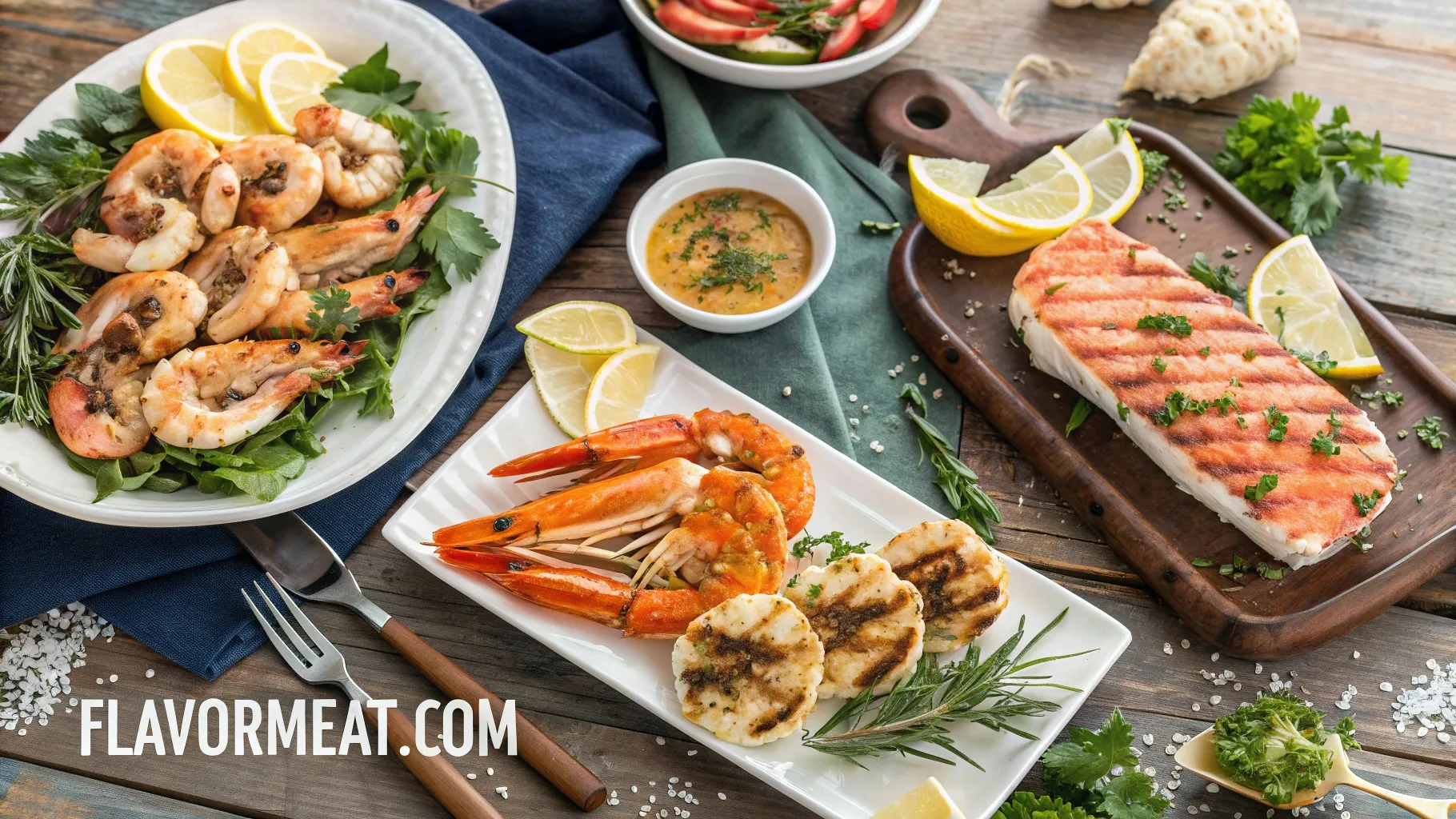
Welcome to FlavorMeat’s Ultimate Seafood Recipes Guide!
Fresh, flavorful, and endlessly versatile — seafood is one of the most rewarding ingredients to cook with. From a simple grilled fish dinner to a creamy shrimp pasta or a hearty seafood gumbo, the ocean offers endless possibilities for creativity in your kitchen.
This Seafood Recipes Guide is your go-to hub for mastering the art of cooking fish, shrimp, crab, and more. Whether you’re just learning how to handle seafood properly or you’re an experienced home chef expanding your recipe collection, you’ll find everything you need here — from essential cooking techniques and food safety tips to FlavorMeat’s best, tested seafood dishes.
At FlavorMeat.com, we believe great seafood starts with fresh ingredients, the right preparation, and a touch of inspiration. That’s why this guide brings you step-by-step advice, global recipe ideas, and smart storage tips — all crafted to make seafood cooking simple, delicious, and fun.
So grab your apron, heat up the pan, and let’s dive in — your journey to mastering seafood starts now!
Start Here: Your Seafood Recipes Hub
Welcome to your all-in-one Seafood Recipes Hub, where fresh flavors meet simple cooking. Whether you love the rich taste of grilled salmon, the delicate sweetness of shrimp, or the cozy comfort of a seafood chowder, this guide is your starting point for cooking seafood like a pro.
At FlavorMeat, we make seafood approachable for everyone — from quick weekday dinners to gourmet weekend feasts. This page gathers all the essentials:
- How to choose the freshest fish and shellfish
- Key cooking methods (grilling, baking, poaching, frying)
- Must-try seafood recipes
- Pro tips for storage and flavor pairing
💡 Tip: Scroll down to explore our best seafood recipes and discover how easy it is to bring ocean-fresh flavor to your kitchen.
How to Choose Fresh Seafood
Cooking great seafood starts long before you turn on the stove — it begins with choosing the freshest, highest-quality fish or shellfish available. The flavor, texture, and even safety of your dish depend on proper selection and handling. Here’s how to confidently pick the best seafood every time.
1. Look for Bright Eyes and Firm Flesh (for Whole Fish)
When buying whole fish, freshness is easy to spot. The eyes should be clear, bright, and slightly bulging, never cloudy or sunken. The skin should look shiny and metallic, and the flesh should spring back when pressed — not feel soft or mushy.
💡 FlavorMeat Tip: Always check the gills — they should be red or pink, not brown or grayish.
2. Smell Is Everything
Fresh seafood smells like the ocean — clean, slightly salty, and never “fishy.” A strong or sour odor is a clear sign the fish is past its prime. Trust your nose — it’s your best freshness detector.
3. Choosing Shellfish (Shrimp, Crab, Lobster)
- Shrimp: Look for firm, translucent bodies with no black spots or ammonia smell.
- Crab & Lobster: Should feel heavy for their size and show movement (if alive).
- Scallops: Choose dry-packed (not soaked) scallops — they cook and sear better.
💡 Pro Tip: Frozen shellfish can be just as good as fresh if it’s properly sealed and labeled.
4. Buying Oysters, Clams & Mussels
These should always be alive when purchased. Their shells must be tightly closed or close when tapped. Discard any that remain open — they’re not safe to eat.
💡 FlavorMeat Tip: Store shellfish in a breathable container (never sealed plastic) in the fridge until ready to cook.
5. Check for Proper Storage at the Market
Seafood should always be displayed on a thick bed of fresh ice, ideally in a cold, shaded area. Avoid seafood sitting in water or with dry edges — that’s a sign of poor handling.
6. Frozen vs. Fresh — What’s Better?
Don’t overlook frozen seafood! High-quality fish is often flash-frozen right after catch, locking in freshness and nutrients. Just make sure it’s vacuum-sealed and thaw it slowly in the fridge overnight for best texture.
7. Buying from Trusted Sources
Choose reputable fish markets, grocery stores with high turnover, or certified online seafood suppliers. When possible, look for sustainable sourcing labels like:
- MSC (Marine Stewardship Council) for wild-caught seafood
- ASC (Aquaculture Stewardship Council) for farmed fish
💡 FlavorMeat Tip: Ask your fishmonger when the seafood arrived — fresher is always better, and they’ll often share valuable prep advice too.
Essential Seafood Cooking Techniques
Cooking seafood may look delicate, but with the right techniques, you’ll discover how easy it is to achieve restaurant-quality results at home. Whether you’re pan-searing salmon, steaming mussels, or grilling shrimp, the key is control — gentle heat, proper timing, and fresh ingredients.
1. Pan-Searing — Crispy Outside, Tender Inside
Best for fish fillets like salmon, cod, halibut, or tilapia. Heat olive oil or butter in a non-stick skillet over medium-high heat. Pat the fish dry, season it well, and place it skin-side down. Cook for 3–4 minutes until golden and crisp, then flip and cook another 2–3 minutes until flaky.
💡 FlavorMeat Tip: Don’t move the fish too soon — letting it sear undisturbed gives that beautiful golden crust.
2. Grilling — Smoky and Flavorful
Grilling enhances seafood’s natural sweetness with a light char. Use skewers for shrimp, fish steaks, or scallops to prevent sticking. Brush with oil and grill over medium heat for 2–5 minutes per side.
💡 Pro Tip: Use a grill basket or foil to keep delicate fish from breaking apart.
Best Cuts: Tuna, swordfish, shrimp, lobster tails.
3. Steaming — Light and Healthy
Steaming locks in nutrients and preserves delicate flavors. Line your steamer with herbs or citrus slices to infuse subtle aroma. Steam shrimp or fish for 5–10 minutes, depending on thickness.
💡 FlavorMeat Tip: Perfect for clean eating — no oil needed, just pure flavor.
4. Baking — Even Cooking with Little Effort
Oven baking works wonderfully for fillets, whole fish, or mixed seafood casseroles. Preheat to 400°F (200°C), season your seafood, and bake for 10–15 minutes or until it flakes easily with a fork.
💡 FlavorMeat Tip: For a restaurant-style finish, bake seafood with lemon slices, olive oil, and fresh herbs like dill or parsley.
5. Sautéing — Quick and Flavorful
Perfect for shrimp, scallops, or small fish pieces. Heat oil or butter, add seafood, and sauté for just a few minutes until opaque and slightly golden. Add garlic, wine, or herbs at the end for extra depth.
💡 Pro Tip: Seafood cooks fast — don’t step away from the pan!
6. Poaching — Moist and Gentle Cooking
Poaching keeps seafood tender and juicy. Simmer gently (never boil) in a flavorful broth made from water, wine, herbs, and lemon. Great for white fish or shrimp.
💡 FlavorMeat Tip: Add a touch of cream or butter to the poaching liquid for richness.
7. Deep-Frying or Air-Frying — Crispy Perfection
Crispy fried shrimp or calamari are irresistible when done right. Coat seafood lightly in flour or breadcrumbs, and fry in 350°F (175°C) oil for 2–3 minutes until golden. For a lighter option, air-fry with minimal oil spray.
💡 FlavorMeat Tip: Always pat seafood dry before coating — moisture prevents crispiness.
8. Broiling — Quick Heat, Intense Flavor
Broiling gives seafood a golden, caramelized top layer in minutes. Place seasoned fillets or shrimp under the broiler for 5–7 minutes. Perfect when you want that oven-roasted finish without long cooking times.
💡 Pro Tip: Brush seafood with melted butter or marinade before broiling for added shine and taste.
9. Knowing When It’s Done
Seafood is perfectly cooked when it’s opaque, moist, and flakes easily with a fork. Overcooking is the most common mistake — watch closely and trust visual cues more than time alone.
💡 FlavorMeat Tip: A digital thermometer helps — fish and shrimp are done at 145°F (63°C) internal temperature.
Must-Try Seafood Recipes
From light and refreshing dishes to rich, comforting favorites, seafood offers endless ways to delight your taste buds. Here’s a curated list of FlavorMeat’s most popular seafood recipes, each one tested, flavorful, and designed to bring the taste of the ocean straight to your table. Whether you’re cooking for family, friends, or just yourself — these recipes are simple to follow yet impressive enough to serve anywhere.
1. Seafood Gumbo Recipe
Read Recipe →
A classic Louisiana favorite, this hearty gumbo blends shrimp, crab, oysters, and fish in a rich roux-based sauce with Creole spices. It’s deeply comforting and bursting with flavor.
💡 FlavorMeat Tip: Serve it over steamed rice and garnish with green onions for that true Southern touch.
Perfect for: Family dinners, cozy nights, and seafood lovers craving bold flavor.
2. Layered Seafood Dip Recipe
Read Recipe →
This easy no-bake appetizer layers crab, shrimp, cream cheese, and tangy cocktail sauce for a creamy, irresistible dip. It’s the ultimate crowd-pleaser for parties or game nights.
💡 Pro Tip: Chill for 30 minutes before serving — it enhances the texture and flavor.
Perfect for: Gatherings, potlucks, and casual celebrations.
3. Seafood Bisque Recipe
Read Recipe →
A rich and creamy seafood bisque made with tender shrimp, crab, and a velvety blend of butter, cream, and herbs. Each spoonful delivers deep, comforting flavor — the kind that feels like a restaurant classic right from your own kitchen.
💡 FlavorMeat Tip: Add a splash of fresh lemon juice or a pinch of cayenne pepper to brighten the flavor and balance the creaminess.
Perfect for: Cozy dinners, romantic evenings, or impressing guests with an elegant seafood starter.
4. Seafood Stuffing Recipe with Crab and Shrimp
Read Recipe →
A flavorful twist on traditional stuffing — this seafood stuffing blends tender crab meat, juicy shrimp, and buttery herbs into a golden, savory bake. It’s rich, comforting, and perfect as a side or a show-stopping main for special occasions.
💡 FlavorMeat Tip: For extra depth, mix in a dash of Old Bay seasoning or a squeeze of fresh lemon juice before baking.
Perfect for: Holiday dinners, Sunday feasts, or seafood lovers who want something hearty and full of flavor.
5. Seafood Casserole Recipe
Read Recipe →
This creamy seafood casserole combines tender shrimp, flaky white fish, and rich crab meat in a velvety sauce topped with golden breadcrumbs. It’s the ultimate comfort food — hearty, flavorful, and easy to make for family dinners or gatherings.
💡 FlavorMeat Tip: Add a sprinkle of Parmesan cheese or fresh parsley before baking for extra flavor and a beautiful golden finish.
Perfect for: Family dinners, potlucks, or cozy weekend meals.
More Seafood Inspirations from FlavorMeat
Explore even more seafood favorites:
Marinades, Seasonings & Sauces for Seafood
Seafood’s delicate flavor shines brightest when paired with the right seasoning or sauce. Whether you’re working with shrimp, fish, crab, or scallops, the right marinade or glaze transforms it from simple to spectacular. In this section, you’ll find versatile, easy-to-make combinations that elevate every bite — without overpowering the natural freshness of the sea.
1. Marinades — Infuse Depth and Tenderness
A good seafood marinade should be light, citrusy, and balanced. The key is short marination — seafood absorbs flavors fast!
Classic Lemon Herb Marinade:
- 3 tbsp olive oil
- Juice of 1 lemon
- 2 cloves garlic, minced
- 1 tbsp chopped parsley
- Salt, black pepper, and a pinch of paprika
Whisk ingredients together and marinate your fish or shrimp for 15–30 minutes before cooking.
💡 FlavorMeat Tip: Avoid long marination — acid can “cook” seafood and make it mushy.
Other Marinade Ideas:
- Asian-Inspired: Soy sauce, ginger, sesame oil, and honey.
- Mediterranean: Olive oil, oregano, garlic, and lemon zest.
- Spicy Cajun: Paprika, cayenne, thyme, and a touch of brown sugar.
2. Dry Rubs — Quick Flavor with Texture
Dry rubs are perfect for grilling or roasting seafood when you want flavor without liquid.
All-Purpose Seafood Rub:
- 1 tbsp smoked paprika
- 1 tsp garlic powder
- 1 tsp onion powder
- ½ tsp cayenne pepper (optional)
- ½ tsp dried thyme
- Salt and pepper to taste
Pat seafood dry, coat lightly, and let rest 10 minutes before cooking.
💡 Pro Tip: Combine dry rubs with a drizzle of olive oil or butter before grilling for a crisp, caramelized finish.
3. Glazes & Sauces — The Finishing Touch
A rich glaze or light sauce adds that final burst of flavor and aroma.
Top FlavorMeat Sauce Ideas:
- Garlic Butter Sauce: Melted butter, minced garlic, parsley, and lemon juice — perfect for shrimp or lobster.
- Creamy Dill Sauce: Greek yogurt, dill, lemon zest, and a touch of mustard — ideal for baked or poached fish.
- Sweet Chili Glaze: Chili sauce, soy sauce, honey, and lime juice — adds a tangy-sweet kick.
- White Wine Sauce: A classic French touch made with butter, white wine, and shallots.
💡 FlavorMeat Tip: Brush sauces on seafood in the final minutes of cooking to prevent burning and seal in moisture.
4. Flavor Pairing Cheat Sheet
| Seafood Type | Best Marinades & Rubs | Ideal Sauces |
|---|---|---|
| Fish (salmon, cod, tilapia) | Lemon herb, Cajun, soy-ginger | Dill sauce, lemon butter |
| Shrimp & Scallops | Garlic-chili, citrus glaze | Garlic butter, sweet chili |
| Crab & Lobster | Smoked paprika, citrus oil | White wine butter, spicy aioli |
| Mussels & Clams | White wine, garlic broth | Creamy tomato sauce, saffron broth |
💡 FlavorMeat Tip: For an unforgettable seafood platter, mix flavors — grilled shrimp with lemon butter, baked fish with dill, and crab drizzled in garlic butter create a perfectly balanced trio.
5. Quick Tips for Perfect Flavor
- Always use fresh herbs and citrus for marinades.
- Balance salt and acid to highlight, not hide, seafood’s flavor.
- Add butter or olive oil for richness — but don’t overdo it.
- Experiment with global spices like curry, harissa, or wasabi for fusion-style seafood.
- Taste as you go — subtle adjustments can make a huge difference.
Seafood Meal Ideas & Pairings
Seafood is one of the most flexible proteins you can cook with — light yet satisfying, simple yet elegant. Whether you’re aiming for a quick weeknight dinner or a beautifully plated dish for guests, pairing seafood with the right sides and flavors makes all the difference. Here’s your ultimate guide to creating balanced, mouthwatering seafood meals.
1. Classic & Comforting Meals
When you want hearty, familiar flavors, these timeless combinations never fail.
- Baked Salmon + Garlic Mashed Potatoes + Steamed Asparagus: A wholesome, balanced dinner with buttery textures.
- Seafood Gumbo + White Rice + Cornbread: A Southern-style comfort meal full of rich, layered flavor.
- Crispy Fried Fish + Coleslaw + Potato Wedges: A golden, satisfying combo with the perfect crunch.
💡 FlavorMeat Tip: Always finish with a squeeze of lemon to brighten heavy or creamy dishes.
2. Light & Fresh Combinations
Perfect for summer days, quick lunches, or clean-eating goals — these meals keep seafood’s natural flavor at the center.
- Grilled Shrimp + Quinoa Salad + Citrus Dressing: Fresh, high-protein, and packed with color.
- Pan-Seared Cod + Roasted Vegetables + Olive Oil Drizzle: Simple, light, and nutrient-rich.
- Tuna Salad + Whole-Grain Crackers + Avocado Slices: Great for meal prep or a quick bite.
💡 Pro Tip: Use cold-pressed olive oil and fresh herbs for extra freshness without heaviness.
3. International Flavors to Try
Travel the world through your plate with these globally inspired pairings.
- Thai Coconut Shrimp + Jasmine Rice + Mango Salad: Sweet, spicy, and refreshing.
- Moroccan Fish Tagine + Couscous + Mint Yogurt: A fragrant, comforting North African favorite.
- Italian Seafood Pasta + Garlic Bread + Green Salad: Elegant and indulgent — perfect for dinner parties.
💡 FlavorMeat Tip: Keep sides mild when the main dish is spicy, and vice versa — balance is key.
4. Family-Friendly Favorites
These recipes are simple enough for weeknights and loved by everyone at the table.
- Fish Tacos + Corn Salad + Lime Crema: Fun to assemble and perfect for picky eaters.
- Shrimp Stir-Fry + Brown Rice + Broccoli: Quick, colorful, and loaded with nutrients.
- Seafood Mac & Cheese + Steamed Green Beans: Comfort food with a touch of luxury.
💡 FlavorMeat Tip: Add a touch of sweetness — like honey glaze or mango salsa — to make seafood more kid-friendly.
5. Drinks & Desserts that Pair Beautifully
| Meal Type | Best Drink Pairing | Dessert Idea |
|---|---|---|
| Grilled Shrimp | Lemon Iced Tea or Sparkling Water | Key Lime Pie |
| Fried Fish | Fresh Lemonade or Mineral Water | Vanilla Ice Cream |
| Baked Salmon | Green Juice or Cucumber Cooler | Fruit Tart |
| Seafood Pasta | Tropical Mocktail or Mint Infused Water | Tiramisu |
| Crab Cakes | Ginger Ale or Citrus Punch | Cheesecake |
💡 FlavorMeat Tip: Citrus-based desserts or light wines perfectly balance the saltiness and richness of seafood meals.
Storage & Reheating Tips for Seafood
Seafood is delicate and highly perishable, so storing and reheating it properly is essential to maintain freshness, flavor, and safety. Whether you’re saving leftovers from dinner or meal-prepping for the week, these best practices ensure your seafood stays delicious and safe to eat.
1. Storing Fresh Seafood Before Cooking
Refrigerate fresh seafood immediately after buying it. Keep it in the coldest part of your fridge, ideally at 32–34°F (0–1°C). Store it on a plate or tray lined with ice and cover it loosely with plastic wrap or foil. For shellfish like clams and mussels, place them in a breathable container (never sealed plastic).
💡 FlavorMeat Tip: Cook seafood within 1–2 days of purchase for the best taste and texture.
2. Storing Cooked Seafood
Once cooked, let seafood cool for no more than 20–30 minutes before refrigerating. Store it in airtight containers to prevent odors from spreading.
Shelf Life:
- Cooked seafood in fridge: 3–4 days
- Cooked seafood in freezer: Up to 3 months
💡 Pro Tip: Separate cooked seafood from sauces — store them individually to preserve freshness.
3. Reheating Seafood Properly
Seafood reheats quickly, and overheating can dry it out or make it rubbery.
Best Reheating Methods:
- Oven: Warm at 300°F (150°C) for 10–15 minutes. Add a splash of water, broth, or olive oil to keep moisture.
- Stovetop: Reheat gently in a covered pan on low heat with a few drops of water or sauce.
- Microwave: Use a low setting, cover loosely, and heat in 20–30 second intervals, checking frequently.
💡 FlavorMeat Tip: Always reheat seafood until it reaches 145°F (63°C) internally for food safety.
4. Freezing and Thawing Seafood
For long-term storage, freeze seafood in vacuum-sealed or airtight freezer bags. Press out as much air as possible to prevent freezer burn.
Freezer Life:
Freezer Life:
| Seafood Type | Freezer Life (0°F / -18°C) |
|---|---|
| Fish fillets | Up to 6 months |
| Shrimp, crab, scallops | 3–6 months |
| Cooked seafood dishes | Up to 3 months |
| Lobster or crab (in shell) | Up to 4 months |
💡 Pro Tip: Thaw seafood slowly in the refrigerator overnight or under cold running water — never at room temperature
5. Food Safety Essentials
- Never refreeze thawed or reheated seafood.
- Discard any seafood with a sour smell, dull color, or slimy texture.
- Wash hands, cutting boards, and utensils thoroughly after handling seafood.
- Keep raw and cooked seafood separate in storage to avoid cross-contamination.
💡 FlavorMeat Tip: Add a drizzle of lemon juice or olive oil after reheating to revive seafood’s fresh flavor.
Seafood Dishes from Around the World
Seafood connects kitchens across continents — every culture has its own signature way of bringing the flavors of the ocean to the table. From rich stews to grilled delicacies, these global seafood recipes highlight how versatile and universal seafood truly is. Let’s take a culinary tour of the world’s most beloved seafood traditions.
🇺🇸 1. United States – Coastal Comforts
America’s coasts offer an abundance of iconic seafood dishes. From New England Clam Chowder, a creamy and hearty soup, to Southern Shrimp and Grits, bursting with smoky flavor, U.S. seafood is all about comfort and freshness.
💡 FlavorMeat Tip: For a lighter twist, try swapping cream-based chowder for a tomato-based Manhattan version.
🇫🇷 2. France – Elegant and Refined
France turns seafood into art. Dishes like Bouillabaisse, a fragrant Mediterranean fish stew from Marseille, and Sole Meunière, delicately pan-fried fish in lemon butter, showcase balance and finesse.
💡 Pro Tip: A squeeze of fresh lemon or herbs like tarragon can elevate any seafood dish instantly.
🇪🇸 3. Spain – Festive and Flavorful
Spain’s Paella de Marisco is the ultimate celebration of seafood — a saffron-infused rice dish packed with shrimp, mussels, squid, and clams. Each bite carries sun, sea, and spice.
💡 FlavorMeat Tip: Use short-grain rice like bomba for perfect texture and color absorption.
🇯🇵 4. Japan – Freshness at Its Finest
Japanese seafood cuisine focuses on purity and precision. Classics include Sushi and Sashimi, where freshness is key, and Tempura Shrimp, light and crispy.
💡 FlavorMeat Tip: When cooking tempura at home, use ice-cold batter to achieve that signature crisp texture.
🇲🇦 5. Morocco – Spice and Soul
Moroccan seafood dishes like Chermoula Fish and Seafood Tagine blend rich spices — cumin, coriander, paprika, and preserved lemon — with olive oil and herbs for unforgettable flavor.
💡 Pro Tip: Pair with fluffy couscous and mint tea for a full Moroccan experience.
🇮🇹 6. Italy – Coastal Simplicity
Italians love to let the seafood speak for itself. Dishes like Spaghetti alle Vongole (Clam Pasta) and Grilled Branzino rely on olive oil, garlic, and a hint of chili for depth.
💡 FlavorMeat Tip: Always reserve a splash of pasta water to create a silky sauce base.
🇹🇭 7. Thailand – Sweet, Sour & Spicy Harmony
Thai seafood dishes balance all five tastes beautifully. Thai Basil Shrimp and Green Curry Fish combine coconut milk, herbs, and spice for deeply aromatic meals.
💡 FlavorMeat Tip: Add fresh basil and lime just before serving to keep the dish vibrant and fragrant.
🇬🇷 8. Greece – Fresh and Wholesome
Greek cuisine is full of bright, Mediterranean seafood plates like Grilled Octopus or Baked Fish with Lemon and Olive Oil. Everything revolves around freshness and simplicity.
💡 FlavorMeat Tip: Drizzle with olive oil and oregano right after grilling — a traditional Greek finishing touch.
🇲🇽 9. Mexico – Zesty and Refreshing
Mexico brings a bold, citrusy twist with Ceviche, made from raw fish “cooked” in lime juice and mixed with tomatoes, onions, and cilantro. It’s light, tangy, and refreshing.
💡 FlavorMeat Tip: Always use very fresh fish and chill before serving for maximum flavor and safety.
🌎 10. Fusion Creations for Modern Kitchens
Combine ideas from different cuisines for your own seafood masterpiece — like Teriyaki Shrimp Tacos, Mediterranean Fish Bowls, or Cajun-Style Seafood Pasta. The possibilities are endless.
💡 FlavorMeat Tip: Don’t be afraid to experiment — seafood loves creativity!
Nutrition & Health Benefits of Seafood
Seafood isn’t just delicious — it’s one of the healthiest protein sources on the planet. Packed with lean protein, essential fats, and key nutrients, seafood supports heart health, brain function, and overall wellness. Whether you enjoy grilled fish, shrimp pasta, or crab salad, adding seafood to your diet is a flavorful way to stay healthy.
1. Core Nutrition Facts (Per 100g Cooked Fish or Shrimp)
| Nutrient | Average Amount | Health Benefit |
|---|---|---|
| Calories | 120–150 kcal | Light yet energy-rich |
| Protein | 20–25 g | Builds and repairs muscles |
| Fat | 3–6 g | Healthy unsaturated fats |
| Omega-3 Fatty Acids | 0.8–2 g | Supports heart and brain health |
| Vitamin D | 5–8 µg | Strengthens bones and immunity |
| Vitamin B12 | 1–3 µg | Boosts energy and cognitive function |
| Selenium | 30–40 µg | Acts as a powerful antioxidant |
| Iodine | 35 µg | Supports thyroid function |
| Iron | 1–2 mg | Promotes healthy blood circulation |
💡 FlavorMeat Tip: Opt for grilled, baked, or steamed seafood to retain nutrients while keeping calories low.
2. Top Health Benefits of Eating Seafood
Heart Health: Omega-3 fatty acids in seafood reduce bad cholesterol, lower blood pressure, and help prevent heart disease.
Brain Function: Regular seafood intake supports memory, focus, and long-term cognitive health.
Joint & Bone Strength: The combination of vitamin D, calcium, and phosphorus helps keep bones strong and joints flexible.
Healthy Skin & Hair: The natural oils and minerals in seafood promote glowing skin and shiny hair.
Immune Support: Selenium and zinc strengthen your immune system and protect against inflammation.
💡 FlavorMeat Tip: Eating seafood twice a week provides a healthy balance of nutrients your body needs — especially for active lifestyles.
3. Best Types of Seafood for Health
| Seafood Type | Main Benefits |
|---|---|
| Salmon | Rich in omega-3s and vitamin D |
| Tuna | Excellent source of lean protein |
| Shrimp | Low in calories, high in iodine |
| Sardines | Packed with calcium and healthy fats |
| Crab & Lobster | High in B12 and zinc |
| Cod | Mild, low-fat option for daily meals |
💡 Pro Tip: Rotate your seafood choices weekly — it keeps meals interesting and ensures a variety of nutrients.
4. Healthy Eating Tips for Seafood Lovers
- Choose wild-caught or sustainably farmed seafood whenever possible.
- Avoid overcooking — gentle heat preserves flavor and nutrients.
- Pair seafood with colorful vegetables and whole grains for a balanced plate.
- Limit fried seafood — opt for air-frying or oven-baking instead.
- Add fresh herbs, citrus, and olive oil for flavor instead of heavy sauces.
5. Mercury & Safety Considerations
While seafood is healthy, some varieties (like swordfish or king mackerel) contain higher mercury levels. Choose lower-mercury options like salmon, shrimp, cod, and tilapia for regular meals.
💡 FlavorMeat Tip: For children and pregnant women, limit high-mercury fish and focus on light, flaky seafood like haddock or sardines.
FAQs About Cooking and Eating Seafood
Seafood is one of the most rewarding ingredients to cook — but it also raises many common questions about freshness, preparation, and safety. Here are the most frequently asked questions, answered clearly and simply, to help you cook seafood with confidence every time.
1. How can I tell if seafood is fresh?
Fresh seafood should smell clean — like the ocean, not “fishy.” The flesh must be firm and shiny, and shellfish like clams or mussels should have tightly closed shells. Avoid seafood with dull color, sticky texture, or a strong odor.
2. What’s the best way to cook seafood without overcooking it?
Seafood cooks fast — usually within 5–10 minutes, depending on the cut. Use medium heat and watch for visual cues: the meat turns opaque, flakes easily with a fork, and loses its translucent look. For accuracy, aim for an internal temperature of 145°F (63°C).
3. Should I wash seafood before cooking?
No, washing raw seafood can spread bacteria around your sink and kitchen. Instead, pat it dry with a paper towel to remove excess moisture — this helps it cook evenly and achieve better browning.
4. Can I cook seafood from frozen?
Yes! You can cook frozen seafood directly — just adjust the cooking time slightly. For best results, thaw it slowly in the refrigerator overnight. Quick thawing under cold running water also works if you’re in a hurry.
5. What’s the best way to season seafood?
Keep it light — seafood has a naturally delicate flavor. Use fresh herbs, citrus (lemon or lime), garlic, olive oil, or mild spices. Avoid heavy marinades that overpower the taste.
6. How long can I keep cooked seafood in the fridge?
Cooked seafood should be refrigerated within two hours of cooking and consumed within 3–4 days. Always store it in airtight containers to maintain freshness and prevent odor transfer.
7. Can I reheat seafood safely?
Yes — reheat gently at low to medium heat. Add a splash of broth or water and cover the dish to keep moisture in. Overheating can make seafood tough or rubbery, so heat just until warmed through.
8. What’s the healthiest way to prepare seafood?
Steaming, baking, grilling, or sautéing are the healthiest options since they use little or no oil. Air-frying is another great choice for a crispy finish with less fat. Avoid deep-frying or heavy cream sauces for everyday meals.
9. Which seafood types are most sustainable?
Look for eco-labels like MSC (Marine Stewardship Council) for wild-caught and ASC (Aquaculture Stewardship Council) for farmed fish. Salmon, cod, sardines, shrimp, and mussels from certified sources are among the most sustainable options.
10. Is seafood safe for children and pregnant women?
Yes — seafood provides valuable nutrients for growth and brain development. Just avoid high-mercury fish like swordfish, shark, or king mackerel. Stick to low-mercury choices like salmon, tilapia, shrimp, or haddock, and ensure seafood is fully cooked.
💡 FlavorMeat Tip: Always cook seafood gently, store it properly, and pair it with light, natural flavors. The fresher and simpler it is, the better it tastes!
Conclusion
Seafood is one of nature’s greatest gifts — light, nourishing, and full of flavor possibilities. From sizzling shrimp and buttery salmon to hearty seafood gumbo, every dish brings the taste of the ocean straight to your table.
By now, you’ve learned how to choose fresh seafood, cook it perfectly, and pair it with the right marinades and sides for any occasion. Cooking seafood doesn’t have to be complicated — it’s all about keeping it fresh, simple, and balanced.
Whether you’re preparing a quick weekday meal or hosting a special dinner, these FlavorMeat Seafood Recipes will help you create dishes that impress every time.
👉 Ready to dive in?
Explore our full collection of delicious seafood dishes here:
➡️ Discover All Seafood Recipes »
And don’t stop there — keep exploring our other cooking guides to complete your FlavorMeat experience:
- Beef Recipes Hub — From juicy steaks to comforting stews.
- Chicken Recipes Hub — Simple, healthy, and always delicious.
- Main Meat Recipes Guide — Your full resource for mastering all types of meat dishes.
💡 FlavorMeat Tip: Bookmark this guide and keep it as your trusted kitchen companion for all things seafood. The more you cook, the more you’ll fall in love with the ocean’s endless flavors.
Before you head to the kitchen, check out these expert guides for safe and healthy seafood cooking: