

If you’ve never made beef tongue before, this is the perfect place to start. A well-prepared Beef Tongue Recipe delivers one of the most tender, melt-in-your-mouth beef experiences you can imagine. Slow cooking transforms this humble cut into something rich, silky, and deeply comforting. While it may look intimidating at first glance, the process is surprisingly simple: simmer gently, peel easily, slice beautifully, and serve with your favorite sides. This recipe blends old-fashioned technique with modern flavor, creating a dish that feels both homey and impressively gourmet. Whether you’re planning a cozy dinner at home or exploring traditional dishes, beef tongue is a flavorful, high-protein option that deserves a spot in your kitchen.
Why This Recipe Works
Slow Cooking Creates Perfect Tenderness
Beef tongue contains tough connective tissue, but slow simmering breaks everything down gently. The result is buttery tenderness that slices effortlessly. It’s nearly impossible to overcook at low heat, making it ideal for beginners.
Aromatics Build Flavor Naturally
You don’t need complicated seasonings to bring out the best in this cut. Onion, garlic, bay leaves, and peppercorns infuse depth into the broth while keeping the flavor clean and comforting. Optional herbs like thyme or parsley add a fresh dimension.
Easy Peel Technique for Clean Slices
The outer skin may look intimidating, but once the tongue is cooked properly, it peels right off with zero struggle. The warm, tender meat underneath is smooth and ready for slicing.
Beginner-Friendly and Versatile
You can serve beef tongue in classic slices with potatoes, sauté it with onions, turn it into tacos, or enjoy it with mushroom gravy. This recipe gives you a reliable base for endless variations.
Ingredients You’ll Need
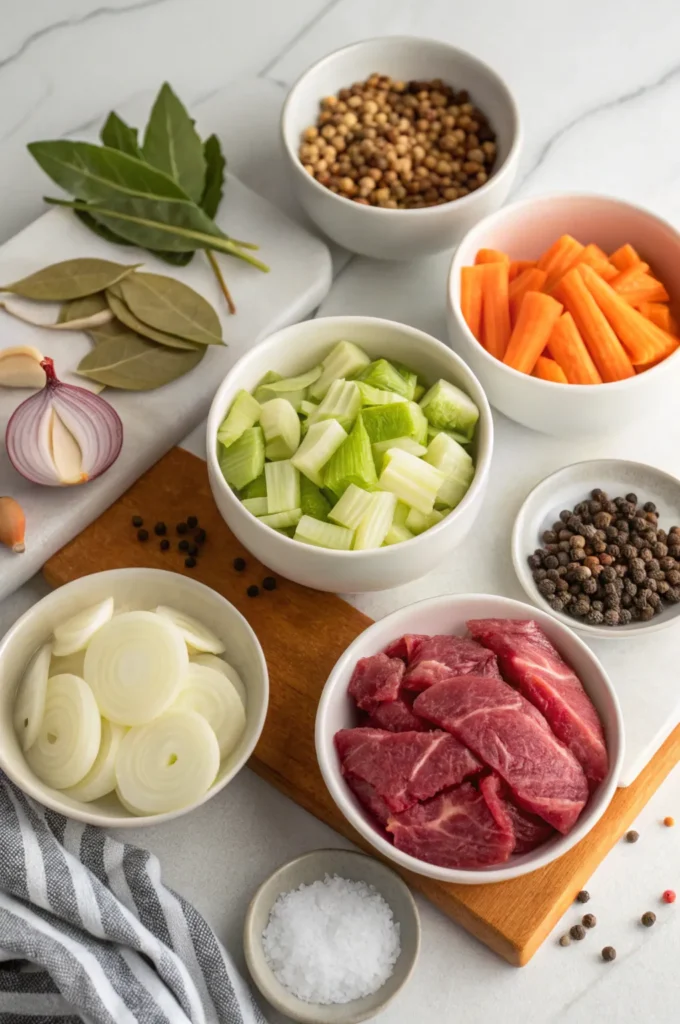
Main Ingredients
- 1 whole beef tongue (2.5–3.5 lbs)
- 1 large onion, quartered
- 4 cloves garlic, smashed
- 2 bay leaves
- 1 tsp black peppercorns
- 1–2 tsp salt
- Water or beef broth (enough to fully cover the tongue)
Optional Flavor Boosters
- 1 carrot, cut into chunks
- 1 celery stalk
- ½ tsp paprika
- 1 tsp dried thyme or oregano
- Fresh parsley stems
For Serving
- Olive oil or butter (for searing slices)
- Sautéed mushrooms and onions
- Lemon wedges
- Fresh chopped parsley
- Mashed potatoes, rice, or tortillas
Step-by-Step Instructions
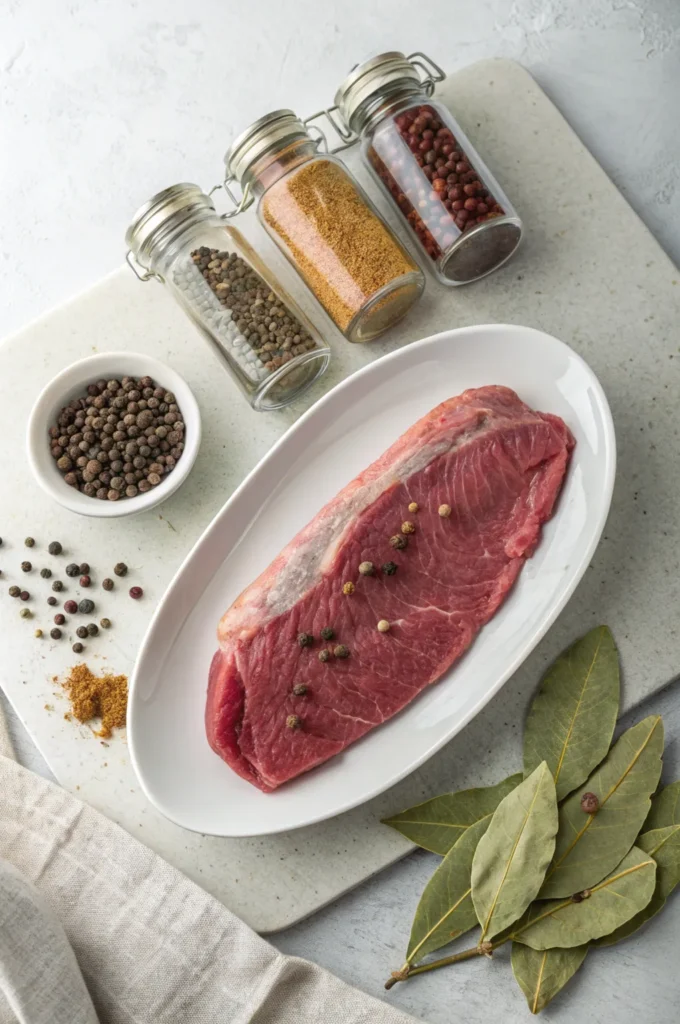
Step 1 — Clean the Tongue
Rinse the tongue under cold water and trim away any excess fat or loose membrane. No need to remove the thick skin—that comes off after cooking. Cleaning ensures a mild, pleasant flavor.
Step 2 — Build the Flavor Base
Place the tongue in a large pot or Dutch oven. Add onion, garlic, bay leaves, peppercorns, salt, and optional vegetables like carrot and celery. Pour in enough water or beef broth to fully cover the meat. This becomes a rich, flavorful cooking broth as it simmers.
Step 3 — Slow Simmer Until Fork-Tender
Bring the pot to a gentle boil, then reduce heat to low. Cover and simmer for 3–4 hours, depending on the size of the tongue. You’ll know it’s done when a fork inserts easily into the thickest part. Skim foam occasionally for a clear broth.
Step 4 — Peel Effortlessly While Warm
Use tongs to remove the tongue onto a cutting board. Let it cool for just a few minutes—enough to handle safely. Peel away the thick outer skin while it’s still warm. It should loosen and slide off in large sections. Underneath, you’ll reveal perfectly tender, silky meat.
Step 5 — Slice or Sear for Serving
For classic sliced beef tongue, cut thin slices across the grain. If you want extra flavor, heat a skillet with a little oil and sear the slices until golden and crisp at the edges. This step adds incredible depth.
Step 6 — Serve with Sauce or Sides
You can serve the tongue as-is for a clean, home-style presentation or pair it with sautéed onions, mushroom gravy, mashed potatoes, rice, or tortillas. It’s surprisingly versatile and works with a wide range of flavors.
Pro Tips for Tender, Flavorful Results

Don’t Rush the Cooking Time
Low and slow is the only way to get proper tenderness. Under-cooking will make the tongue tough and chewy.
Peel While Still Warm
The skin becomes almost impossible to remove once cooled. Warm meat = effortless peeling.
Save the Broth
The broth is rich and deeply flavorful. Use it to make gravy, add to soups, or freeze for future recipes.
Slice Against the Grain
Slicing against the natural lines of the meat ensures silky, tender bites every time.
Optional Searing Makes It Next-Level
Searing slices in a bit of oil creates a deliciously crispy edge and enhances flavor.
Serving Suggestions

Classic Sliced Beef Tongue Dinner
Serve thin slices with mashed potatoes, rice, or roasted vegetables. Spoon a little broth over the meat for added moisture.
Beef Tongue with Mushroom-Onion Gravy
Sauté mushrooms and onions, then add a ladle of broth and reduce into a thick, savory sauce. Pour over sliced tongue for a comforting meal.
Tacos, Sandwiches, or Rice Bowls
Thinly sliced beef tongue works beautifully in tacos with cilantro and onion, as a sandwich filling, or over rice with a squeeze of lemon.
Brighten with Fresh Herbs or Lemon
Add fresh parsley, cilantro, or a squeeze of lemon juice to lift the flavor and balance richness.
Recipe Variations
Crispy Pan-Seared Version
Sear boiled slices in oil or butter until browned and crisp on the edges.
Garlic-Butter Beef Tongue
Melt butter with garlic, toss the sliced tongue, and finish with herbs.
Asian-Inspired Variation
Simmer with ginger and green onions, then drizzle with a soy-based sauce.
Slow Cooker Version
Cook everything on LOW for 6–8 hours. The result is incredibly tender.
Instant Pot Method
Pressure cook for 90 minutes with natural release.
Storage & Reheating Tips
Refrigeration Guide
Store in an airtight container for up to 4 days. Keep slices moist with a bit of broth.
Freezing for Long-Term Storage
Freeze whole or sliced portions for up to 3 months. Wrap tightly to retain freshness.
Best Reheating Methods
Warm gently in a covered skillet with a splash of broth. Avoid high heat, which can cause dryness.
How to Keep Slices Tender
Always reheat in liquid or steam—not dry heat.
Nutrition Facts
Approximate per-serving estimate:
Calories: 320
Protein: 26 g
Fat: 22 g
Carbs: 2 g
Sodium: 480 mg
Iron: High in iron and B-vitamins
Final Thoughts
This Beef Tongue Recipe delivers comforting, old-fashioned flavor with minimal effort. Tender, rich, and incredibly satisfying, it’s a dish that deserves far more recognition. Whether served simply with broth or dressed up with mushrooms, this recipe offers a beautiful balance of flavor and texture. If you enjoyed this dish, be sure to explore more comforting favorites in our Healthy Beef Recipes Collection.
For more inspiration beyond this spicy favorite, visit our Beef Recipes: Your Complete Guide to Cooking Delicious Beef Dishes — your ultimate resource for mastering every type of beef dish with ease and flavor.
For a deeper look at how to cook tender, flavorful meats, check out our full guide: The Ultimate Meat Recipes Guide
If you enjoyed this recipe, you might also love our Baked Beans With Ground Beef
Common Questions
How Do I Know the Tongue Is Fully Cooked?
A fork should slide in easily, even into the thickest part.
What Does Beef Tongue Taste Like?
Like a very tender, rich cut of beef—similar to brisket but softer.
How Do I Peel the Tough Skin Easily?
Peel while the tongue is warm. The skin loosens naturally after proper simmering.
Can I Use a Slow Cooker?
Yes! It produces excellent tenderness with no effort.
Can I Make It Ahead of Time?
Absolutely. Beef tongue reheats beautifully when stored with broth.
Why Is My Beef Tongue Tough?
It wasn’t cooked long enough. Add another hour of simmering.
Can I Use the Broth for Soup?
Yes—it’s flavorful and perfect for gravies or stews.
Is This Beef Tongue Recipe Healthy?
Yes. It’s high in protein, rich in nutrients, and naturally low in carbs.

Beef Tongue Recipe Made Easy

Ingredients
Main
- 1 whole beef tongue 2.5–3.5 lb
- 1 large onion quartered
- 4 cloves garlic smashed
- 2 bay leaves
- 1 tsp whole black peppercorns
- 1½ tsp salt plus more to taste
- Water or beef broth enough to fully cover
Optional Flavor Boosters
- 1 carrot cut into chunks
- 1 celery stalk
- ½ tsp paprika
- 1 tsp dried thyme or oregano
- A few parsley stems
For Serving (choose any)
- Olive oil for searing slices
- Sautéed mushrooms and onions
- Fresh parsley chopped
- Lemon wedges
- Mashed potatoes steamed rice, or warm tortillas
Instructions
- Clean: Rinse the tongue under cold water; trim excess fat or loose membrane (do not peel the thick skin yet).
- Pot & Aromatics: Place tongue in a large pot/Dutch oven. Add onion, garlic, bay leaves, peppercorns, salt, and optional carrot/celery/herbs. Cover with water or broth.
- Simmer Low & Slow: Bring to a gentle boil, then reduce heat to low. Cover and simmer 3–4 hours, skimming foam as needed, until a fork slides in easily.
- Peel: Transfer tongue to a board. Cool just enough to handle, then peel off the thick outer skin while warm; it should slip off in large pieces.
- Slice or Sear: Slice thinly across the grain. Optional—heat a skillet with a little olive oil and sear slices until edges are golden for extra flavor.
- Serve: Spoon a little cooking broth over slices or top with sautéed mushrooms and onions. Serve with potatoes, rice, or tortillas and a squeeze of lemon.
Notes
- Tenderness tip: If not fork-tender after 3 hours, continue simmering and check every 20–30 minutes.
- Peel while warm: The skin is easiest to remove before the meat cools.
- Save the broth: Strain and use for gravy, soups, or to moisten leftovers when reheating.
- Reheat gently: Warm slices in a covered skillet with a splash of broth; avoid high heat.
- Make-ahead friendly: Cook, peel, and slice; refrigerate up to 4 days or freeze up to 3 months (store with some broth).
Leave a Reply
There are no reviews yet. Be the first one to write one.