
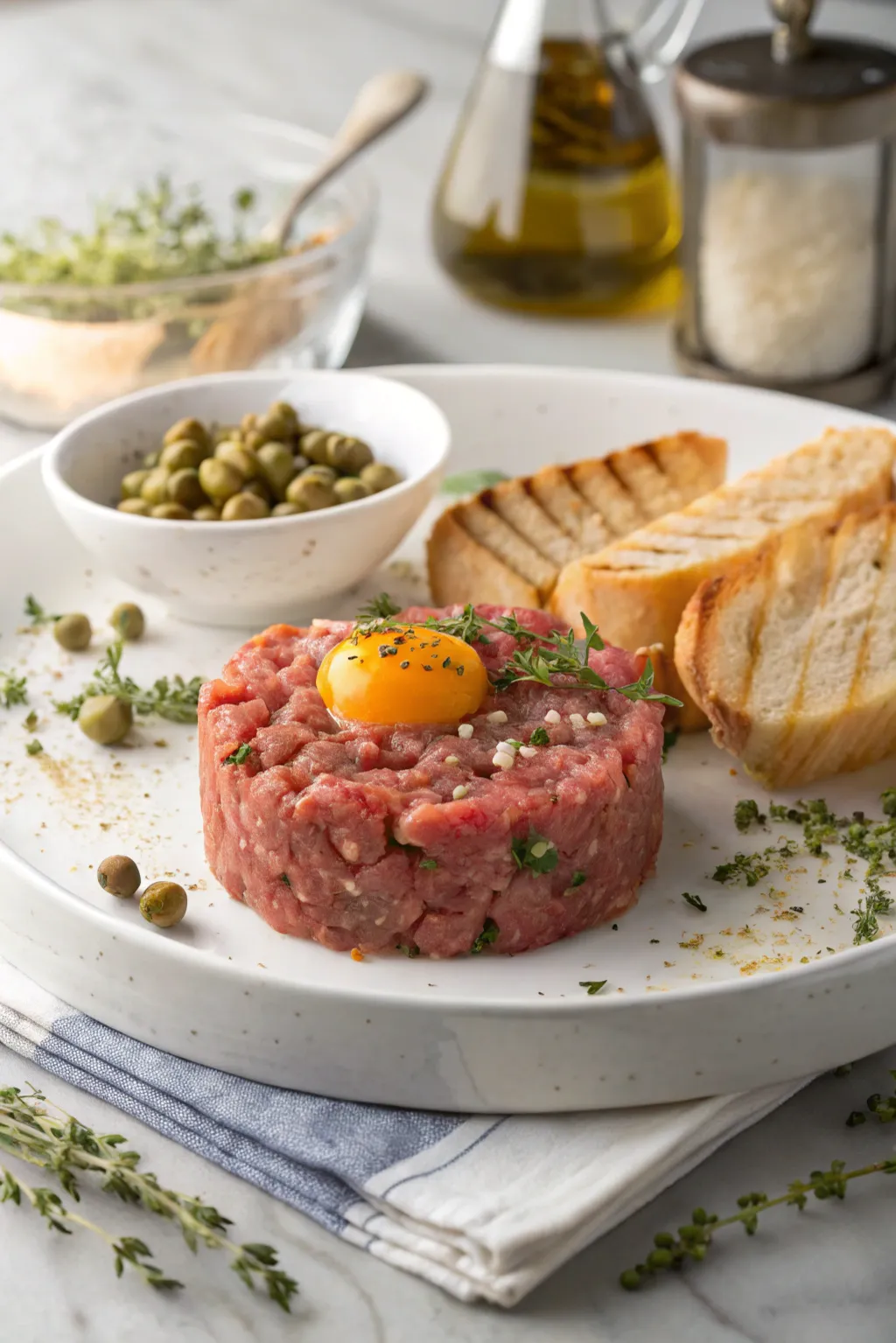
There’s something magical about sitting in a charming French bistro, watching the chef prepare steak tartare tableside with precision and flair. This steak tartare recipe brings that elegant culinary experience right into your home kitchen. For years, I hesitated to make this classic dish, intimidated by the idea of serving raw beef. But once I learned the secrets from a French chef friend, I discovered that steak tartare is surprisingly simple to prepare—and absolutely unforgettable when done right.
What makes this classic steak tartare so special? It’s the perfect balance of premium, hand-cut beef with bold seasonings like capers, shallots, and Dijon mustard, all crowned with a silky egg yolk. Whether you’re hosting an intimate dinner party or treating yourself to something extraordinary, this recipe delivers restaurant-quality results every time. In just 20 minutes, you’ll create an impressive appetizer that showcases the pure, refined flavor of exceptional beef. Trust me, once you master this authentic French dish, you’ll want to serve it at every special occasion!
Why This Steak Tartare Recipe Works
This beef tartare recipe succeeds where others fall short because it respects the fundamental principles of this French classic while making it accessible for home cooks. Here’s what sets it apart:
• Premium beef selection: Using tenderloin or top sirloin ensures tender, flavorful meat without any chewy bits or excessive fat.
• Hand-cutting technique: Knife-chopped beef has superior texture compared to ground meat, giving you control over consistency and reducing bacterial exposure.
• Perfectly balanced seasonings: The combination of Dijon mustard, Worcestershire, capers, and shallots enhances without overwhelming the natural beef flavor.
• Temperature control: Keeping everything cold throughout preparation ensures food safety and maintains the meat’s fresh, clean taste.
• Simple, fresh ingredients: No complicated techniques or hard-to-find items—just quality ingredients that let the beef shine.
The result? A dish that tastes like it came from a Michelin-starred restaurant but requires no advanced culinary skills. If you can dice an onion and whisk ingredients together, you can master this authentic steak tartare.
Ingredients You’ll Need
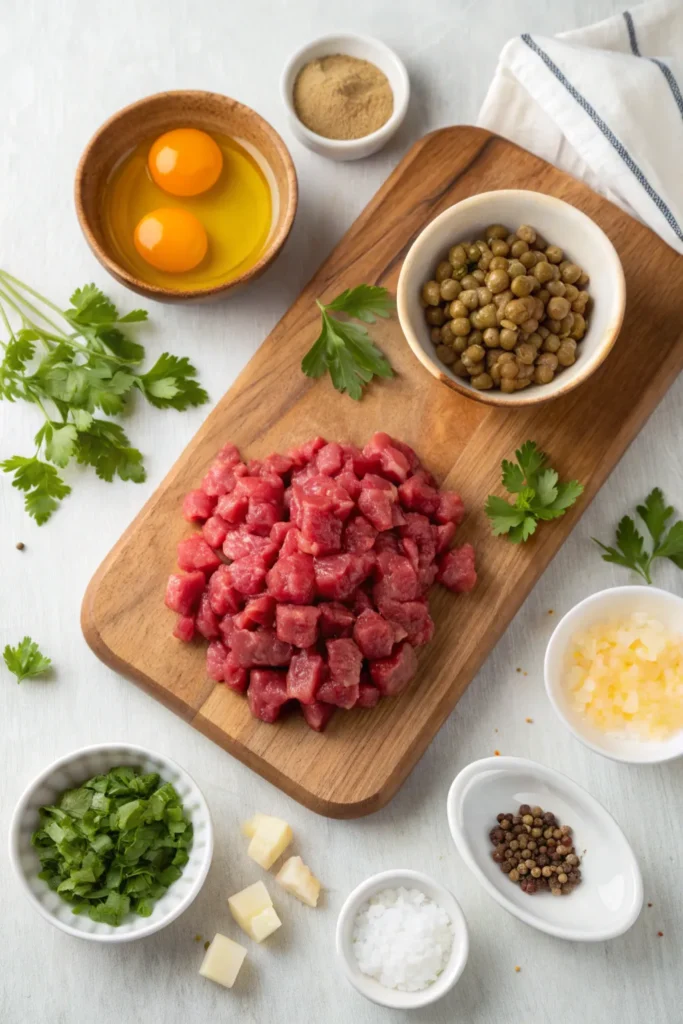
The key to exceptional steak tartare is using the freshest, highest-quality ingredients available. Never compromise on the beef—this dish is all about showcasing premium meat.
For the Steak Tartare:
• 12 oz (340g) beef tenderloin or top sirloin, extremely fresh and high-quality
• 2 egg yolks (preferably pasteurized for food safety)
• 2 tablespoons capers, finely chopped
• 2 tablespoons shallots, finely minced
• 1 tablespoon Dijon mustard
• 1 tablespoon extra virgin olive oil
• 2 teaspoons Worcestershire sauce
• 1 teaspoon hot sauce (such as Tabasco)
• 2 tablespoons fresh parsley, finely chopped
• Salt and freshly ground black pepper, to taste
• Fresh lemon juice, to taste (about 1 teaspoon)
For Serving:
• Toasted baguette slices or high-quality crackers
• Cornichons (small French pickles)
• Additional capers for garnish
• Fresh herbs for garnish (parsley, chives, or microgreens)
• Flaky sea salt (optional, for guests to season to taste)
Step-by-Step Instructions
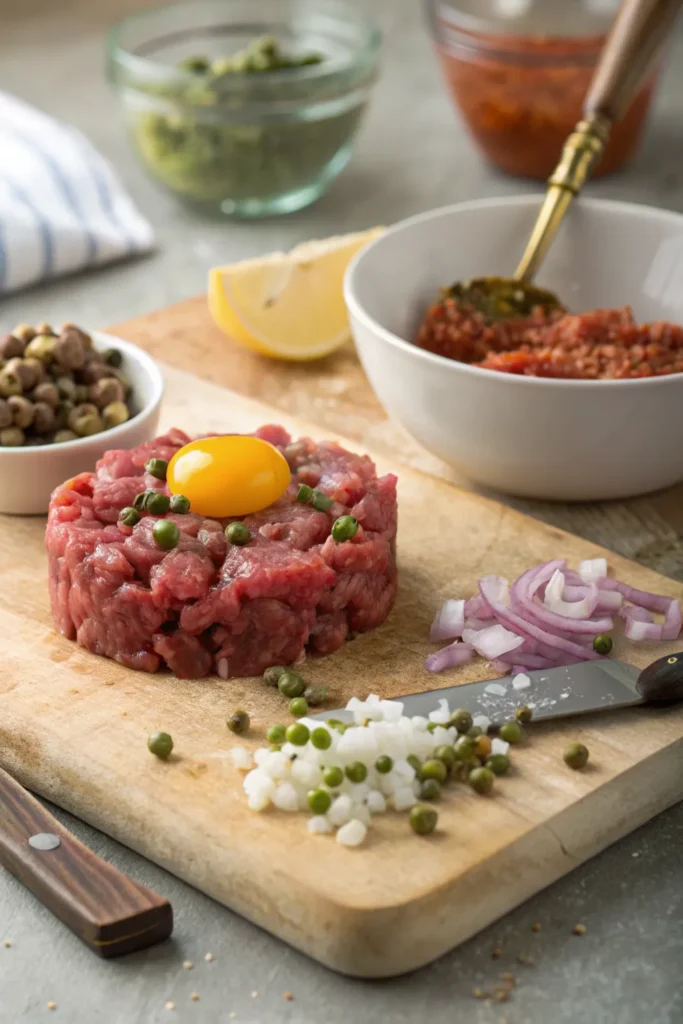
Follow these steps carefully to create perfect steak tartare. Remember: cleanliness and cold temperatures are your top priorities for both food safety and optimal flavor.
1. Chill the beef: Place the beef tenderloin in the freezer for 15-20 minutes. You want it firm but not frozen—this makes cutting much easier and cleaner. While waiting, prepare and chill all your other ingredients and equipment, including your mixing bowl and serving plates.
2. Prepare the meat: Remove the beef from the freezer. Using a very sharp knife on a sanitized cutting board, trim away any fat, sinew, or silver skin. Cut the meat into thin slices (about ⅛ inch), then into strips, and finally into a fine dice (approximately ⅛-inch cubes). For the most authentic texture, you can hand-chop the beef until you reach your desired consistency. Work quickly to keep the meat cold, transferring to a chilled bowl immediately.
3. Mix the flavor base: In a separate chilled bowl, whisk together the Dijon mustard, Worcestershire sauce, hot sauce, and olive oil until well combined. This creates the flavor foundation that will coat every piece of beef.
4. Combine ingredients: Add the minced shallots, chopped capers, and fresh parsley to the diced beef. Pour the mustard mixture over the meat and use a cold spoon or silicone spatula to gently fold everything together. Be gentle—you want to coat the beef evenly without overworking it, which can make the texture mushy.
5. Season to perfection: Taste a small amount of the mixture (it’s safe at this point since everything is fresh). Season with salt, freshly ground black pepper, and a squeeze of fresh lemon juice. The flavors should be bold and balanced. Remember that the egg yolk will add richness and mellow the seasonings slightly, so err on the side of slightly over-seasoned.
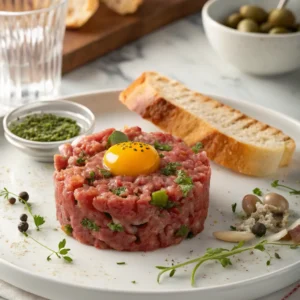
6. Plate with style: Using a ring mold (3-4 inches in diameter) or shaping with two large spoons, form the tartare into neat portions on chilled serving plates. Gently press down to compact slightly, then carefully remove the mold. Create a small well or indent in the center of each portion using the back of a spoon.
7. Add the crowning glory: Carefully separate your egg yolks, ensuring no white gets mixed in. Gently place one whole egg yolk in the well of each tartare portion. The yolk should sit like a golden jewel on top of the meat.
8. Garnish and serve immediately: Garnish with a few extra capers, a light drizzle of olive oil, and fresh herbs. Serve right away with toasted baguette slices, cornichons on the side, and perhaps a small dish of flaky sea salt. For the classic French experience, allow guests to mix the egg yolk into their tartare tableside.
Pro Tips for Perfect, Safe Steak Tartare
These expert tips ensure your steak tartare is not only delicious but also safe to eat. Pay special attention to the beef selection and food safety guidelines.
Selecting the Best Beef:
✓ Buy from a trusted butcher who knows you’re making tartare—they’ll select the freshest, highest-grade beef
✓ Choose beef tenderloin (filet mignon) or top sirloin for the best texture and flavor
✓ The meat should be bright red, never brown, and smell clean and fresh
✓ Purchase and prepare the same day—never use beef that’s been sitting in your fridge
✓ Look for dry-aged beef if available for enhanced, complex flavor
✓ NEVER use pre-ground meat from the supermarket—grinding spreads surface bacteria throughout
Food Safety Essentials:
⚠️ Only prepare steak tartare with beef from a source you completely trust
⚠️ Keep everything cold—from ingredients to equipment to serving plates
⚠️ Use separate cutting boards and knives for raw beef; sanitize all surfaces immediately after
⚠️ Wash hands thoroughly before and after handling raw meat
⚠️ Consider using pasteurized eggs, especially for guests with compromised immune systems
⚠️ Serve immediately after preparation—never let tartare sit at room temperature
⚠️ This dish is not recommended for pregnant women, young children, elderly, or immunocompromised individuals
Flavor and Presentation Tricks:
💡 For traditional French presentation, mix the egg yolk tableside in front of your guests
💡 Freeze your mixing bowls and serving plates for 15 minutes before use
💡 Use a microplane to grate shallots for ultra-fine texture
💡 Toast baguette slices with a light brush of olive oil for extra flavor
💡 Add a tiny pinch of smoked paprika for a subtle, sophisticated twist
💡 Garnish with edible flowers or microgreens for an elegant restaurant presentation
Serving Suggestions
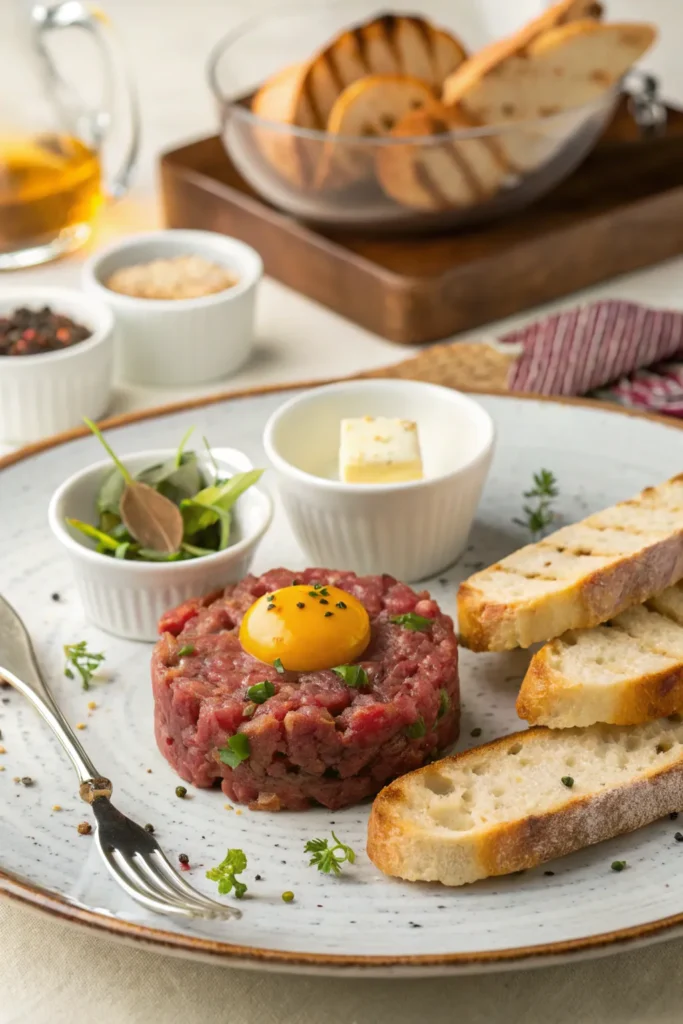
Steak tartare shines as an elegant appetizer for special occasions. Serve it at intimate dinner parties, anniversary celebrations, or romantic date nights at home.
For the ultimate French bistro experience, present the tartare on chilled plates alongside warm, crusty baguette slices, tangy cornichons, and whole grain mustard. The contrast of textures and flavors—silky beef, crunchy bread, acidic pickles—creates a perfectly balanced bite.
Make it a full meal by serving with a simple arugula salad dressed in lemon vinaigrette and crispy French fries. This classic combination is served in bistros throughout Paris and never disappoints!
Recipe Variations
While the classic recipe is perfect as-is, here are some delicious variations to try once you’ve mastered the basics:
• Asian-Inspired Tartare: Replace Dijon mustard with sesame oil, add grated ginger and soy sauce, garnish with toasted sesame seeds and sliced scallions
• Italian Tartare: Mix in sun-dried tomatoes, fresh basil, and a touch of balsamic reduction, top with shaved Parmesan
• Spicy Tartare: Add finely diced jalapeño, sriracha, and lime juice for a bold, spicy kick
• Truffle Tartare: Drizzle with white or black truffle oil and top with truffle shavings for an ultra-luxurious version
• Tuna Tartare: Substitute sushi-grade ahi tuna for beef, add avocado and cucumber for a lighter option
Storage & Food Safety Information
⚠️ IMPORTANT: Steak tartare should be consumed immediately after preparation and should NEVER be stored or saved for later. The combination of raw beef and egg yolk makes this dish unsuitable for leftovers.
Any prepared tartare that has not been eaten must be discarded for food safety reasons. Do not attempt to refrigerate or freeze prepared steak tartare.
Make-Ahead Option: You can prep ingredients separately up to 2 hours in advance: dice the beef and store covered in the coldest part of your refrigerator, chop capers and shallots, and mix the dressing. Combine everything just before serving.
For a deeper look at how to cook tender, flavorful meats, check out our full guide: The Ultimate Meat Recipes Guide
For more inspiration beyond this spicy favorite, visit our Beef Recipes: Your Complete Guide to Cooking Delicious Beef Dishes — your ultimate resource for mastering every type of beef dish with ease and flavor.
Loved this recipe? Explore more delicious options like beef chow fun
Common Questions (FAQs)
Here are answers to the most frequently asked questions about making steak tartare at home:
Q: Is steak tartare safe to eat?
A: Yes, when prepared properly with extremely fresh, high-quality beef from a trusted source. The key is using whole cuts of beef (never ground) and handling with impeccable hygiene. The surface of whole beef is sterile inside, so when you cut it yourself, you minimize bacterial exposure. Always buy same-day and keep everything cold.
Q: What’s the best cut of beef for tartare?
A: Beef tenderloin (filet mignon) is ideal because it’s extremely tender and has minimal connective tissue. Top sirloin is a more affordable alternative that also works well. Avoid cuts with lots of marbling or fat—you want lean, premium beef.
Q: Can I use ground beef from the store?
A: Absolutely not. Pre-ground beef from supermarkets has been processed in ways that spread surface bacteria throughout the meat, making it unsafe to eat raw. You must use whole cuts and dice them yourself immediately before serving.
Q: What if I don’t have a ring mold?
A: No problem! You can shape the tartare using two large spoons (the quenelle technique), pack it into a ramekin and invert it onto the plate, or even use a clean, empty tuna can with both ends removed as a makeshift mold.
Q: Can I make this without the raw egg yolk?
A: Yes, though the egg yolk is traditional and adds richness. If you prefer to skip it, simply mix an extra tablespoon of olive oil into the tartare for moisture. You can also use pasteurized eggs for added safety while keeping the traditional presentation.
Q: How far in advance can I prepare steak tartare?
A: Steak tartare must be prepared and served immediately—it’s not a make-ahead dish. However, you can dice the beef and prepare ingredients up to 2 hours ahead, keeping everything refrigerated separately. Mix and plate just before serving.
Q: Can I substitute the beef with another protein?
A: Yes! Tuna tartare is a popular alternative using sushi-grade ahi tuna. Salmon tartare is also delicious. The preparation method is the same, though you’ll want to adjust seasonings to complement the fish (add ginger, sesame, avocado).
Nutrition Facts
Per Serving (serves 2-4 as appetizer)
| Nutrient | Amount |
| Calories | 280 kcal |
| Protein | 35g |
| Total Fat | 14g |
| Saturated Fat | 4g |
| Carbohydrates | 3g |
| Sugar | 1g |
| Fiber | 0g |
| Sodium | 380mg |
| Cholesterol | 185mg |
| Iron | 3.5mg (20% DV) |
| Vitamin B12 | 2.8mcg (47% DV) |
Health Benefits: Steak tartare is exceptionally high in protein, iron, and vitamin B12. It’s naturally low in carbohydrates and provides essential amino acids. However, due to the raw preparation, it should be enjoyed in moderation and only by healthy individuals.
* Nutritional information is an estimate and may vary based on specific ingredients used.
Final Thoughts
This classic steak tartare recipe is more than just a dish—it’s an experience that brings the elegance of French cuisine into your home. Once you master the technique and understand the importance of quality ingredients and proper handling, you’ll find yourself wanting to serve this impressive appetizer at every special occasion.
The combination of tender, hand-cut beef with bold seasonings and that luxurious egg yolk creates a symphony of flavors and textures that simply can’t be replicated with cooked dishes. Whether you’re hosting an intimate dinner party or treating yourself to a restaurant-quality meal at home, this authentic steak tartare delivers every single time.
If you loved this recipe, be sure to try our other French classics like Coq au Vin and Beef Bourguignon. Don’t forget to leave a rating and comment below—I love hearing about your culinary adventures! Share your beautiful tartare creations on social media and tag us. Bon appétit!
CLASSIC STEAK TARTARE

Ingredients
- 12 oz 340g beef tenderloin or top sirloin
- 2 egg yolks preferably pasteurized
- 2 tablespoons capers finely chopped
- 2 tablespoons shallots finely minced
- 1 tablespoon Dijon mustard
- 1 tablespoon extra virgin olive oil
- 2 teaspoons Worcestershire sauce
- 1 teaspoon hot sauce
- 2 tablespoons fresh parsley chopped
- Salt and black pepper to taste
- Fresh lemon juice to taste
- Toasted baguette and cornichons for serving
Instructions
- Chill beef in freezer for 15-20 minutes until firm but not frozen.
- Trim fat and dice beef into ⅛-inch cubes on clean cutting board.
- Whisk together mustard, Worcestershire, hot sauce, and olive oil.
- Add shallots, capers, and parsley to beef. Pour mustard mixture over and fold gently.
- Season with salt, pepper, and lemon juice to taste.
- Shape into portions using ring mold. Create well in center.
- Place egg yolk in well of each portion.
- Garnish with capers and herbs. Serve immediately with toasted bread.